What idle time really costs
Cloud GPUs are billed for the time the server is allocated to you, not for the work it does. A forgotten notebook or a job that crashed on Friday keeps billing until someone stops the server.
| Left running idle | Cost at Strata on-demand rates |
|---|---|
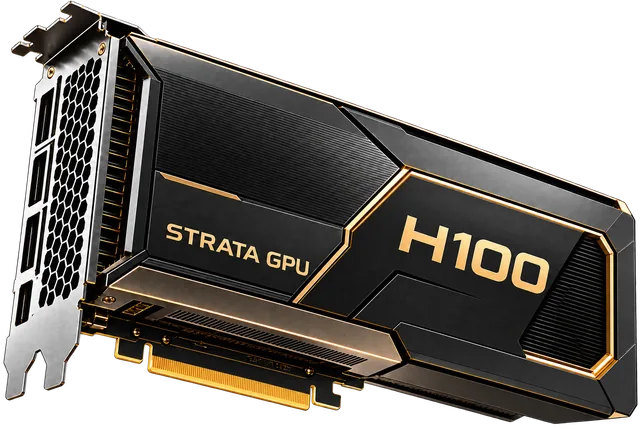
| 1× H100 for 1 hour | $3.23 |
| 1× H100 over a weekend (48 h) | 48 × $3.23 |
| 8× H100 node for a full month (730 h) | $18,863 |
Strata GPU on-demand list prices. Prices as of 2026-11-03.
Five habits that stop idle burn
- Pick per-minute billing for experiments. Strata on-demand time is billed per minute, so a 40-minute test costs 40 minutes, not a rounded hour or day.
- Put every job on a stop rule. End training scripts with a shutdown step, and set a time limit on notebooks and dev boxes. A server that stops itself is the only one that never burns at night.
- Watch utilisation, not just uptime. Log GPU utilisation (for example with
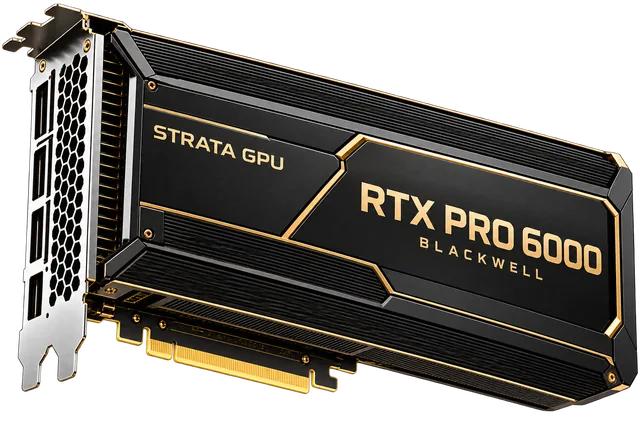
nvidia-smior DCGM) and flag servers below 10–20% for a few hours. - Right-size before you scale. A 7–13B model often fits on one RTX PRO 6000 or one H100; renting a full 8-GPU node for it leaves seven GPUs idle.
- Use a budget you top up. At Strata on-demand usage draws down a prepaid balance you top up yourself, so spend is visible before it becomes a monthly invoice.
When reserved beats on demand
If a GPU is busy most of the month, idle time stops being the problem and the hourly rate becomes the lever. Strata reserved clusters are dedicated bare-metal nodes on 3–36 month terms with 3% to 14% off the on-demand rate: an H100 drops to $2.78 per GPU-hour on a 24–36 month term. If your utilisation is low or spiky, stay on demand and stop servers between runs.
More: On-demand vs reserved GPUs and Idle GPU capacity: the cost nobody sees.
What other providers offer
Marketplaces and pod clouds such as RunPod and Vast.ai are usually cheaper per hour for short, restartable jobs, and some offer auto-stop or serverless options that bill only while a request runs. Check each provider's billing page for minimum increments, storage charges on stopped instances and data-transfer fees, which can keep billing after the GPU stops. Strata suits teams that want dedicated servers, fixed list prices and payment by card, bank transfer, USDT or USDC.